

Streaks, stains, and dull patches on marble or granite countertops can frustrate even the most careful Boca Raton or Miami homeowner. Keeping stone surfaces spotless matters because improper cleaning often causes lasting damage, reducing both luster and value. Professional stone cleaning brings peace of mind by using customized, safe methods that restore shine and protect your investment for years to come.
Table of Contents
- What Is Professional Stone Cleaning?
- Types Of Natural Stone Surfaces Cleaned
- The Specialized Cleaning Process Explained
- Key Features And Benefits For Homeowners
- Risks Of Diy Cleaning And Common Mistakes
- Cost Considerations And Service Comparisons
Key Takeaways
| Point | Details |
|---|---|
| Professional Stone Cleaning Importance | This specialized service restores and protects natural stone surfaces, enhancing their value and aesthetic appeal. |
| Types of Stones Handled | Different stone types like Granite, Marble, and Limestone require unique cleaning methods based on their properties and vulnerabilities. |
| Risks of DIY Cleaning | Attempting DIY stone cleaning can lead to permanent damage and increased repair costs due to incorrect methods or products. |
| Long-Term Value of Professional Services | While initial costs may seem high, professional cleaning prevents future issues and maintains property value, making it a wise investment. |
What Is Professional Stone Cleaning?
Professional stone cleaning is a specialized process designed to restore and preserve the beauty, integrity, and value of natural stone surfaces without causing damage. Unlike routine home cleaning, this technique requires expert knowledge, specialized equipment, and precise techniques tailored to specific stone types and conditions.
The primary objectives of professional stone cleaning include:
- Removing accumulated dirt, debris, and contaminants
- Restoring the stone’s original color and luster
- Preventing long-term deterioration
- Protecting the stone’s structural integrity
- Enhancing aesthetic appeal and property value
Professional stone cleaning involves comprehensive assessment and specialized techniques that go far beyond typical surface cleaning. Experts carefully evaluate the specific stone type, its current condition, potential vulnerabilities, and the most appropriate cleaning method. This process requires understanding the unique characteristics of different stone materials like marble, granite, limestone, and travertine.
The cleaning process typically includes multiple sophisticated steps:
- Initial stone surface inspection
- Determining appropriate cleaning solutions
- Selecting non-abrasive cleaning techniques
- Applying professional-grade cleaning agents
- Utilizing precision cleaning equipment
- Final surface protection and sealing
Pro tip: Always hire certified stone restoration professionals who can provide detailed documentation of their cleaning process and stone-specific expertise.
Types Of Natural Stone Surfaces Cleaned
Professional stone cleaning encompasses a diverse range of natural stone surfaces, each requiring unique care and specialized restoration techniques. These surfaces represent geological formations with distinct characteristics that demand expert knowledge and precision during cleaning and maintenance.
The primary types of natural stone surfaces professionally cleaned include:
- Granite: A dense, igneous rock known for its durability
- Marble: A metamorphic stone prized for its elegant appearance
- Limestone: A sedimentary rock with soft, porous characteristics
- Travertine: A calcium carbonate stone with distinctive textural patterns
- Slate: A fine-grained metamorphic rock with layered structure
- Quartzite: A hard, metamorphic stone resistant to scratching
- Sandstone: A sedimentary rock composed of sand-sized mineral particles
Professional stone restoration experts understand that different stone types require specialized cleaning approaches based on their geological composition. Stones are typically classified into two primary categories: calcareous and siliceous. Calcareous stones like marble and limestone are acid-sensitive and require gentler cleaning methods, while siliceous stones such as granite are more acid-resistant but may contain minerals that need careful treatment.
Each stone type presents unique challenges during cleaning. For instance, marble demands a delicate approach to preserve its polished surface, whereas granite can withstand more aggressive cleaning techniques. Professional cleaners must consider factors like:
Below is a reference table outlining how different types of natural stone respond to cleaning methods and key care considerations:
| Stone Type | Acid Sensitivity | Recommended Cleaning Approach | Typical Use Area |
|---|---|---|---|
| Granite | Low | Mild alkaline cleaner, non-abrasive tools | Kitchens, countertops |
| Marble | High | pH-neutral products, gentle handling | Bathrooms, foyers |
| Limestone | High | Non-acidic cleaners, low-pressure wash | Floors, wall cladding |
| Travertine | High | Enzyme-based solutions, soft brushes | Patios, pool surrounds |
| Slate | Medium | Neutral pH cleaner, light scrubbing | Outdoor areas, roofs |
| Quartzite | Low | Mild detergent, microfiber cloth | Countertops, stairs |
| Sandstone | Medium | Water-based agents, avoid abrasion | Garden paths, walls |
- Stone’s mineral composition
- Surface porosity
- Existing damage or wear
- Type of stains or contaminants
- Desired finish and restoration goals
Pro tip: Always request a detailed stone-specific assessment before initiating any professional cleaning process to ensure the most appropriate and safe restoration method.
The Specialized Cleaning Process Explained
Professional stone cleaning is a meticulously designed process that transforms dirty, worn stone surfaces into pristine, beautiful spaces. This sophisticated approach goes far beyond simple cleaning, representing a carefully orchestrated series of scientific and technical interventions tailored to each unique stone surface.
The comprehensive cleaning process involves several critical stages:
- Initial surface assessment
- Detailed contamination identification
- Selection of appropriate cleaning method
- Precision cleaning technique application
- Surface protection and restoration
- Final quality inspection
Advanced cleaning techniques employ a systematic approach that begins with a thorough evaluation of the stone’s condition. Professional technicians carefully analyze the type of soiling, surface composition, and potential vulnerabilities before selecting the most appropriate cleaning strategy. This meticulous approach ensures that the cleaning process will effectively remove contaminants without causing any damage to the delicate stone surface.
The cleaning methodology typically involves specialized techniques:
- Non-invasive surface testing
- Customized chemical treatment selection
- Controlled cleaning agent application
- Precision mechanical or chemical removal of contaminants
- Neutralization and surface stabilization
- Protective sealing process
Pro tip: Request a comprehensive stone surface analysis before cleaning to ensure the most effective and safest restoration approach.
Key Features And Benefits For Homeowners
Professional stone cleaning delivers remarkable advantages that extend far beyond simple aesthetic improvements. Homeowners investing in these specialized services protect their property’s most valuable architectural elements while simultaneously enhancing their living spaces’ overall beauty and functionality.
Key benefits for homeowners include:
- Preservation of stone surface value
- Prevention of long-term damage
- Restoration of original stone appearance
- Protection against environmental degradation
- Enhanced property aesthetic appeal
- Increased surface durability
- Potential improvement in property market value
Professional cleaning techniques provide comprehensive protection for natural stone surfaces, addressing multiple homeowner concerns simultaneously. By employing specialized methods, professionals can remove stubborn stains, eliminate biological growth, and prevent potential structural deterioration that could lead to expensive repairs or complete stone replacement.
The comprehensive advantages of professional stone cleaning extend across several critical areas:
- Aesthetic restoration of stone surfaces
- Prevention of permanent damage
- Elimination of harmful contaminants
- Restoration of stone’s original color and texture
- Long-term surface protection
- Maintenance of property investment value
Professional stone cleaning is not an expense, but a strategic investment in your property’s long-term preservation and beauty.
Pro tip: Schedule an annual professional stone cleaning assessment to catch potential issues before they become costly repairs.
Risks Of DIY Cleaning And Common Mistakes
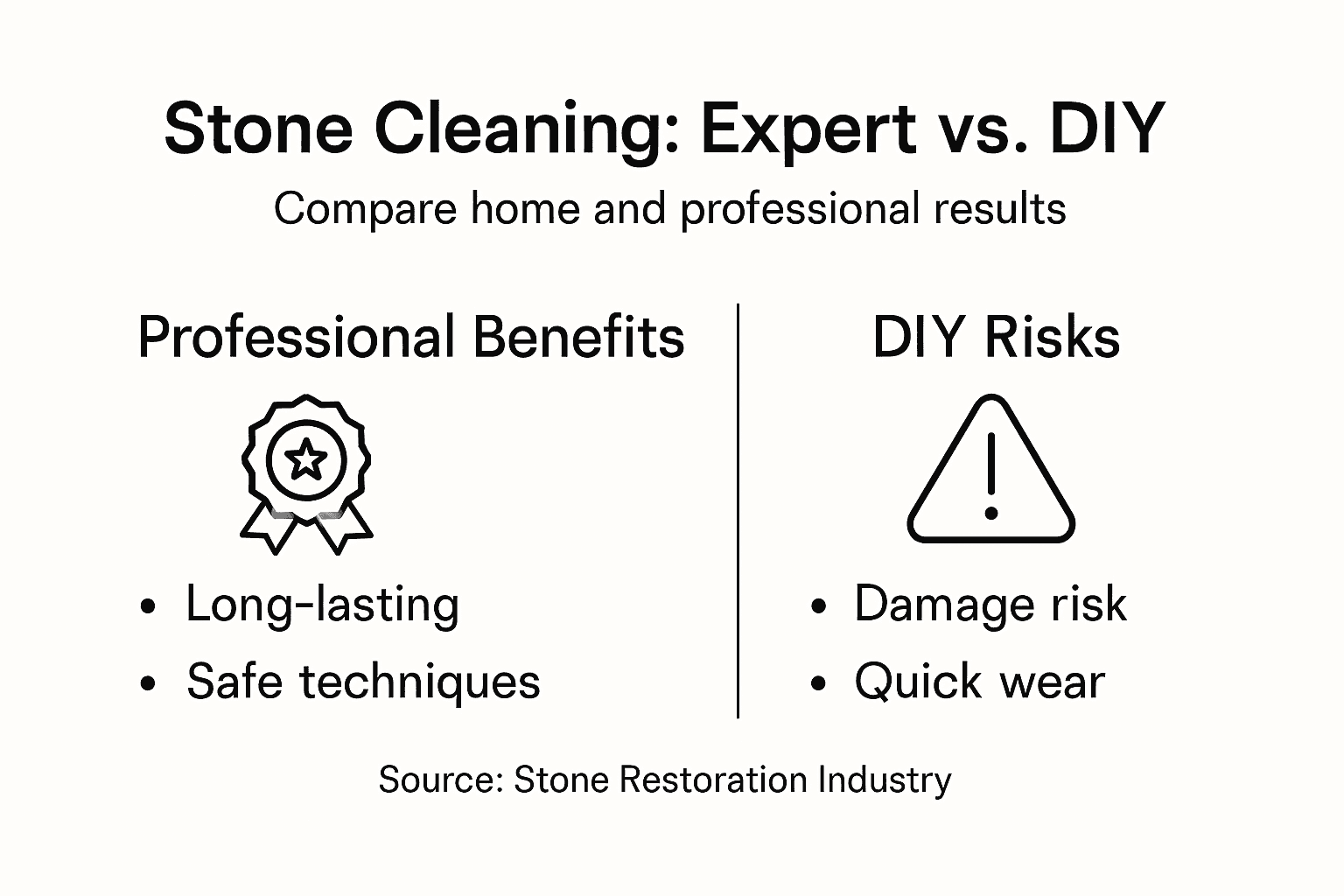
DIY stone cleaning can transform a simple home maintenance task into a potentially costly and dangerous endeavor. Homeowners often underestimate the complexity of stone surface restoration, inadvertently risking permanent damage to their valuable surfaces through well-intentioned but misguided efforts.
The most frequent DIY mistakes include:
- Using incorrect cleaning chemicals
- Applying excessive mechanical pressure
- Selecting inappropriate cleaning tools
- Ignoring stone-specific cleaning requirements
- Failing to understand surface porosity
- Mishandling delicate stone surfaces
- Improper stain removal techniques
Silica exposure and stone damage risks represent significant concerns for untrained individuals attempting stone cleaning. Professional technicians understand the nuanced requirements of different stone types, whereas DIY attempts can lead to irreversible surface deterioration, health hazards, and unexpected financial consequences.
The potential risks of DIY stone cleaning are multifaceted:
- Permanent surface scratching
- Chemical etching and discoloration
- Structural stone degradation
- Potential respiratory health risks
- Voiding manufacturer warranties
- Expensive future restoration costs
Amateur cleaning attempts can transform a minor maintenance issue into a major restoration project.
Pro tip: Always consult a professional before attempting any DIY stone cleaning to understand the specific requirements of your unique stone surfaces.
Here is a comparison of the potential outcomes between professional and DIY stone cleaning efforts:
| Aspect | Professional Cleaning Outcome | DIY Cleaning Outcome |
|---|---|---|
| Surface Appearance | Restored shine and color | Possible dullness or streaks |
| Damage Risk | Minimal with proper methods | High chance of etching or scratching |
| Long-term Protection | Sealing and preventative care included | Often overlooked, leading to wear |
| Health & Safety | Exposure protection and safe chemicals | Possible inhalation and accidental harm |
| Cost Over Time | Lower due to reduced repairs | May increase with corrective actions |
Cost Considerations And Service Comparisons
Professional stone cleaning represents a strategic investment in property maintenance that extends far beyond simple surface restoration. Homeowners must carefully evaluate the comprehensive value proposition, understanding that upfront costs translate into long-term preservation and potentially significant financial savings.
Key cost factors affecting stone cleaning services include:
- Stone surface type and complexity
- Total square footage being cleaned
- Extent of existing damage or contamination
- Specialized cleaning techniques required
- Equipment and material costs
- Level of professional expertise needed
- Restoration versus maintenance approach
Professional cleaning cost considerations reveal that while initial service fees might seem higher than DIY approaches, the long-term economic benefits are substantial. Professional services prevent expensive future repairs, protect property value, and ensure scientifically appropriate stone surface maintenance.
Comparing service options requires understanding different pricing models:
- Per square foot cleaning rates
- Hourly professional service charges
- Comprehensive restoration package pricing
- Maintenance contract options
- Specialized stone-type specific pricing
- Additional protective treatment costs
The true value of professional stone cleaning lies not in its immediate cost, but in preventing potential future restoration expenses.
Pro tip: Request detailed written estimates from multiple professional services, comparing not just price but also included services and guarantees.
Preserve the Beauty and Value of Your Natural Stone Today
The challenge of safely restoring and protecting your stone surfaces demands expert care tailored to each unique material. If you seek to avoid costly damage from improper cleaning or DIY mistakes, understanding the importance of professional stone cleaning methods is crucial. At Affordable Marble Restoration, we specialize in preserving the shine, color, and integrity of marble, granite, travertine, and other natural stones through proven techniques like grinding, honing, polishing, and sealing.
Experience the peace of mind that comes with entrusting your valuable stone surfaces to certified experts who assess your stone’s specific needs and deliver customized restoration solutions. Whether for residential or commercial settings throughout South Florida, our team ensures long-term protection against wear and environmental impact. Take the first step toward maintaining your investment and enhancing your property’s beauty by visiting Affordable Marble Restoration. Discover how our comprehensive stone cleaning services can transform your surfaces and request your personalized consultation today.
Frequently Asked Questions
What is professional stone cleaning?
Professional stone cleaning is a specialized process designed to restore and preserve the beauty, integrity, and value of natural stone surfaces using expert knowledge and specialized equipment.
Why should I hire professionals for stone cleaning instead of doing it myself?
Hiring professionals ensures the use of proper techniques and materials, minimizing the risk of damage to the stone, which can occur from incorrect cleaning methods or inappropriate products during DIY attempts.
What types of natural stone surfaces can be cleaned professionally?
Professional stone cleaning can be applied to various surfaces, including granite, marble, limestone, travertine, slate, quartzite, and sandstone, each requiring specific care and attention.
What are the benefits of professional stone cleaning for homeowners?
The benefits include the preservation of the stone’s value, prevention of long-term damage, restoration of the original appearance, elimination of harmful contaminants, and enhanced aesthetic appeal, which can contribute to a property’s overall market value.
